The AI Governance Clock Is Ticking
Why 2026 Will Be the Year Organizations Can’t Scale AI Without Defensible Capability Evidence
Historical artifact
This post remains public for reference, but it may not reflect current PAICE products, policies, roadmap, or guidance.
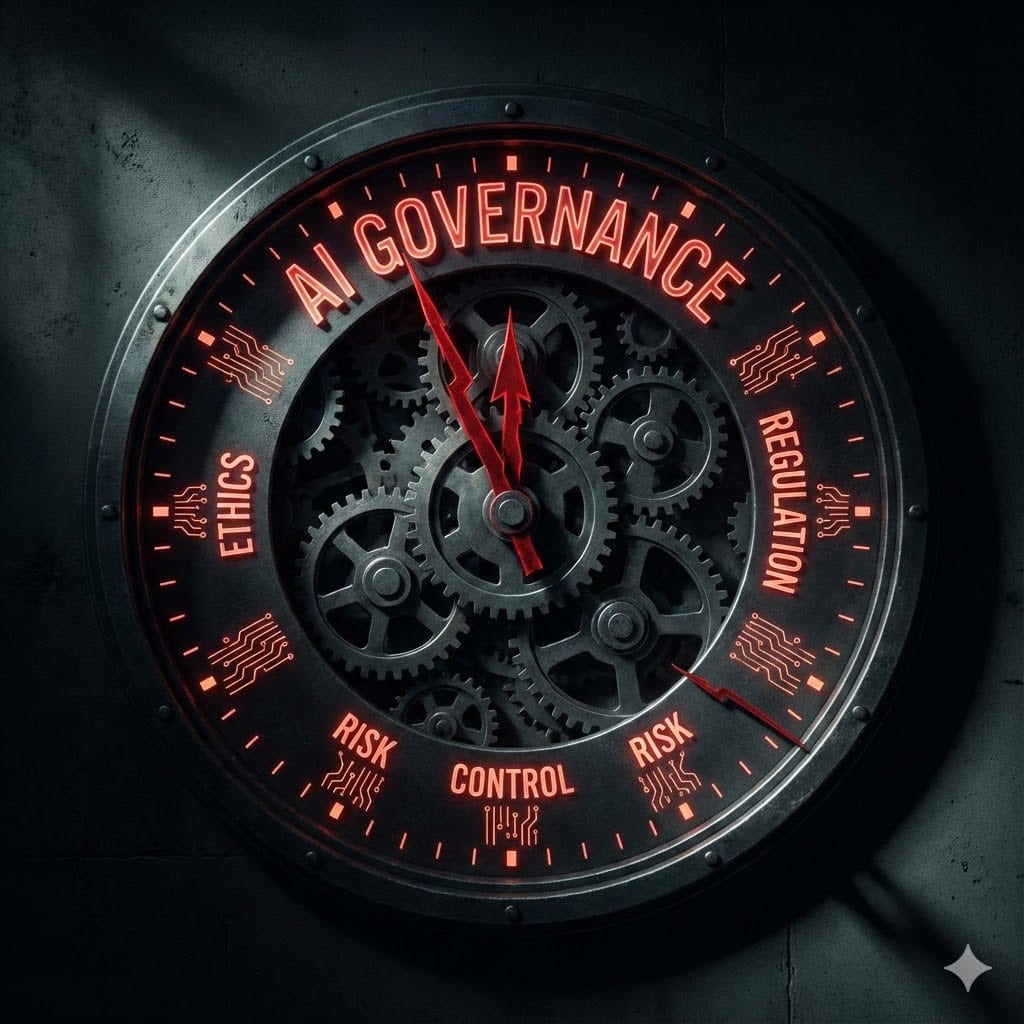
Archived: This post has been superseded by Introducing AI Capability Baseline. It remains available for historical reference.
The AI adoption curve has hit an inflection point. Tools ship daily. Capabilities expand relentlessly.
But governance?
Governance lags behind… dangerously behind.
If your organization is scaling AI without systematically assessing capability, you’re not running an innovation program.
You’re running an uncontrolled experiment with your reputation, compliance posture, and liability exposure as the stakes.
2026 is the year this changes.
Here's why, and what leaders must do now.
The AI Wave Is Here, But Capability Hasn't Kept Pace
Across industries, organizations have embraced AI tools at extraordinary speed: enterprise chat models, copilots, automated drafting systems, and custom internal LLMs.
The technology is accessible, powerful, and increasingly embedded in real workflows.
But one thing has not kept up:
People.
Not their interest.
Not their enthusiasm.
But their measurable ability to collaborate with AI safely, effectively, and consistently.
And the consequences of this gap are already visible across the market:
- AI-assisted work with subtle factual errors slipping into customer channels
- Teams unknowingly violating emerging regulatory expectations
- Leaders unable to defend AI-assisted decisions under audit
- Projects delayed or frozen due to uncertainty about risk exposure
None of this is hypothetical anymore.
These failures emerge the moment organizations deploy AI without understanding workforce readiness.
Why "Governance-First" Becomes Non-Optional in 2026
Three converging forces make the coming year a turning point.
Regulatory Pressure Accelerates
AI oversight is tightening worldwide. New regulations and guidance are shifting expectations from “good intentions” to demonstrable governance.
Regulators, insurers, and industry bodies increasingly expect organizations to prove that people can use AI responsibly, not simply that tools exist or policies were posted.
The shift: from “document broadly” to “demonstrate competence with evidence.”
Audit Demands Evolve
Internal and external auditors are asking new, pointed questions:
- How do you know your people can use AI tools appropriately?
- What evidence do you use to determine readiness?
- How do you monitor capability over time?
Policies alone no longer satisfy scrutiny.
Auditors want behavioral data, not attestations.
The shift: from “trust but verify” to “verify before trust.”
Corporate Risk Posture Hardens
AI is no longer treated as harmless experimentation.
Executives understand that a single AI-driven misstep can trigger:
- Customer-facing errors
- Compliance review
- Regulatory reporting
- Public relations fallout
- Delayed strategic initiatives
When the downside risk becomes enterprise-scale, leadership redefines what “responsible adoption” means.
The shift: from "move fast and test later" to "move fast with defensible governance."
The Hidden Cost of "Do Nothing / Wait"
Organizations often treat AI governance as something to address "after rollout."
But AI capability gaps behave like compound interest: invisible at first, then increasingly expensive.
Here’s the typical trajectory in organizations that deploy AI without capability assessment:
Months 1–3
Small quality issues emerge. Easy to miss. Easy to downplay.
Months 4–6
Patterns begin to form: inconsistent performance, verification lapses, over-reliance on AI, unintentional compliance drift.
Months 7–12
Audit flags appear. Leaders discover discrepancies between “AI usage” and “AI readiness.”
Month 12+
Material incidents drive reactive governance. This is the most expensive and least effective version of governance.
Waiting doesn’t maintain the status quo.
Waiting amplifies exposure.
How PAICE Turns Uncertainty Into Defensible Evidence
PAICE exists for a single purpose:
To provide organizations with defensible evidence of AI collaboration readiness, the kind auditors, boards, regulators, and insurers increasingly expect.
PAICE doesn’t measure whether someone has “taken AI training.”
It measures how they actually behave in real AI-assisted scenarios.
Here’s what leaders receive:
Capability Baseline
A quantified readiness measurement across five dimensions that determine safe, effective AI use.
Clear visibility into strengths, gaps, and organizational variance.
Behavioral Risk Profile
Identification of patterns that create exposure, such as:
- Verification lapses
- Over-trust behaviors
- Bias blindspots
- High-variance teams
You see what’s happening before it becomes a problem.
Governance Artifacts
Audit-ready, board-ready documentation aligned with leading frameworks.
Clear, defensible evidence of due diligence.
PAICE doesn’t deliver “features.”
PAICE delivers outputs. Exactly the kind to stand up under examination.
Why Q1 2026 Pilot Slots Make Strategic Sense
Timing matters.
And Q1 creates a rare alignment for governance-first AI adoption.
Budget & Planning Cycles
Q1 is when strategic initiatives launch, budgets finalize, and audit calendars reset.
Leaders who establish capability baselines early position themselves ahead of scrutiny, not behind it.
Regulatory Inflection
2026 is widely expected to introduce firmer expectations for AI oversight.
Organizations with documented capability baselines will be able to demonstrate proactive governance, a major advantage.
Competitive Positioning
Capability measurement will become standard.
Early adopters build a 12–18 month lead in operational confidence and governance maturity.
Q1 isn’t just a convenient time.
It's the optimal window.
The Choice Is Clear: Proactive Governance or Reactive Damage Control
Most organizations will fall into one of two paths:
Option A: Governance-First (Proactive)
- Assess capability before scaling tools
- Identify and address gaps systematically
- Generate defensible evidence continuously
- Scale AI with confidence and control
Risk: managed, minimized, documented Outcome: sustainable AI adoption and competitive advantage
Option B: Deploy-Then-Govern (Reactive)
- Roll out tools without readiness visibility
- Discover issues only after incidents occur
- Scramble to establish governance under pressure
- Face scrutiny from auditors, regulators, and stakeholders
Risk: material, compounding, often reputational Outcome: delays, costly remediation, credibility loss
Reserve Your Q1 2026 Pilot Slot
PAICE is accepting a limited number of pilot organizations for Q1 launch.
Pilot includes:
- Organizational AI capability assessment (20–100 participants)
- Behavioral risk profiling
- Audit-ready governance documentation
- Strategic recommendations based on real data
- Longitudinal tracking for improvement
Ideal for:
- Enterprises scaling AI tools across teams
- Organizations under audit or compliance expectations
- Risk and governance leaders seeking defensible evidence
- CAIOs and transformation leaders building AI operating systems
Timeline:
- December 2025: Early-commit window
- January 2026: Cohort finalization
- Q1 2026: Baseline establishment
Take Action Before the Window Closes
The question isn't whether governance-first AI adoption will become standard.
It will.
The question is whether your organization enters 2026 ready with defensible capability evidence in hand, or is left scrambling to retrofit governance under pressure.
Ready for a strategic conversation?
Need to vet out our Security Posture, Privacy Policy, Terms of Service, or browser & device support?
Questions about the pilot? [email protected]
PAICE.work: Defensible evidence for the AI era. Capability assessment isn’t optional anymore.
Get Involved:
- Take the assessment (free, always)
- Explore the Founding Partner Program (for organizations)
- Read the whitepaper (comprehensive framework)
- Contact us about your specific requirements
Related Reading
Curious but short on time?
Take the 3-minute PAICE Pulse — a quick confidence check that maps how you see your own AI collaboration posture. No login required.