Will PAICE Support Other AI Models?
Why Your Collaboration Skills Transfer Across Any AI
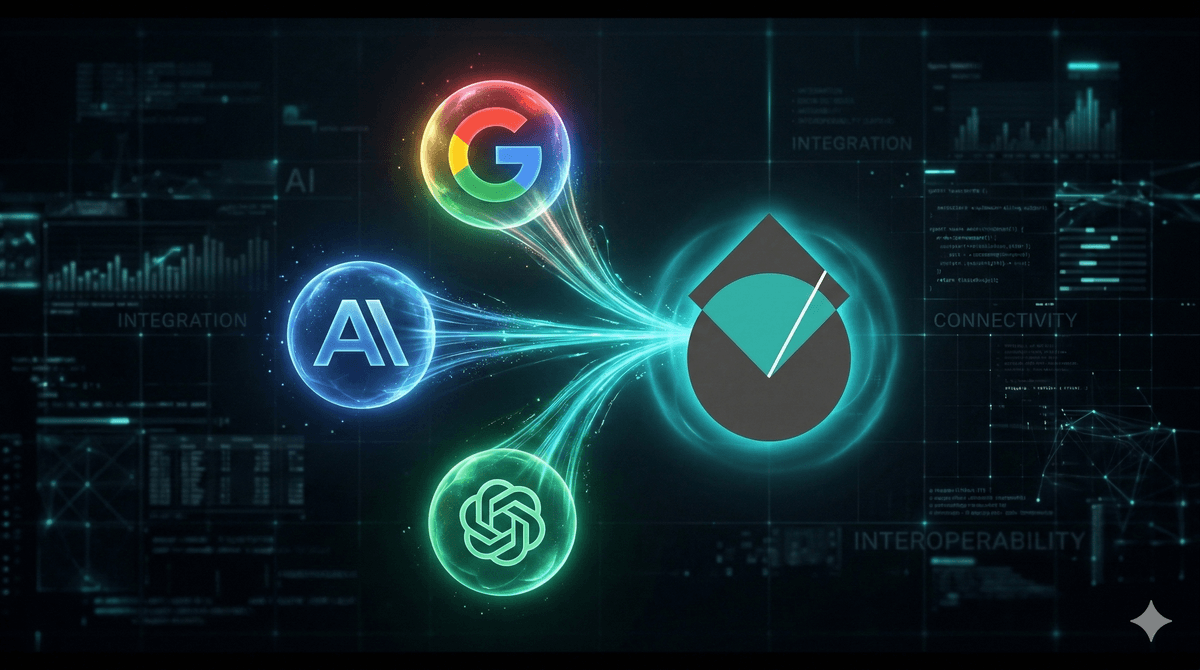
One of the most common questions we hear from professionals evaluating PAICE (People + AI Collaboration Effectiveness) is straightforward: "Does PAICE only work with one AI model?"
The short answer might surprise you: PAICE already uses models from three major providers in every single assessment. But the more important answer is this: it doesn't matter which model you're assessed with, because PAICE measures your behavior, not the model's output.
The Short Answer
Every PAICE assessment today uses models from Anthropic (Claude), Google (Gemini), and OpenAI (ChatGPT). Different models handle different functions within a single assessment session. This isn't a roadmap item or a future plan. It's how the system works right now.
But that's really the less interesting part of the answer. The reason PAICE can work across multiple models is that the skills it measures are universal. Whether you're collaborating with Claude, Gemini, ChatGPT, or the next model that hasn't been released yet, the behaviors that make you effective don't change.
How Multi-Model Assessment Works
Each Function Gets the Best Tool
A PAICE assessment isn't powered by a single model doing everything. The architecture separates distinct functions, and each uses the model best suited for that job:
- Conversation: The model you interact with during the assessment, optimized for natural dialogue and context maintenance
- Evaluation: The model that analyzes your behavioral patterns and generates dimensional scores, optimized for reasoning depth
- Detection: The model that identifies specific behavioral signals in real time, optimized for speed and precision
These functions have different requirements. A model that excels at extended conversation may not be the best choice for rapid pattern detection. By separating concerns, PAICE can use the right tool for each job rather than forcing one model to do everything.
The Cascade Pattern
PAICE uses a cascading fallback architecture for each function. Here's what that means in practice:
- Primary model: The first choice for a given function, selected for quality
- Fallback models: Alternative models from different providers that activate automatically if the primary is unavailable
If the primary conversation model experiences an outage, the system seamlessly switches to a fallback from a different provider. You never notice. Your assessment continues without interruption. This cross-provider resilience is built into every function.
The practical benefit: PAICE doesn't have a single point of failure. An outage at any one AI provider doesn't disrupt your assessment, because the cascade architecture routes around it automatically.
Why You Don't Need to Think About This
From your perspective as the person taking the assessment, none of this is visible. You have a conversation, you collaborate on tasks, and your behavioral patterns are observed and scored. Which specific models are involved in that process is an infrastructure detail, not a user-facing decision.
This is intentional. The assessment experience should be consistent regardless of which models are active behind the scenes.
Why Collaboration Patterns Transfer Across Models
This is the part that matters most for your professional development.
PAICE Measures Behavior, Not Model Knowledge
The five PAICE dimensions, Performance (P), Accountability (A), Integrity (I), Collaboration (C), and Evolution (E), are defined in terms of observable behaviors, not model-specific techniques:
- Accountability measures whether you verify AI output and catch errors. This skill transfers whether the AI is Claude, Gemini, ChatGPT, or a model that doesn't exist yet.
- Integrity measures whether you maintain logical consistency and fact-check claims. This applies to any AI interaction.
- Collaboration measures how effectively you iterate and refine outputs with AI. The iteration patterns that work well are the same across all models.
A professional who carefully verifies AI-generated contract language does so regardless of which model produced it. A clinician who cross-references AI suggestions against clinical guidelines applies that same discipline across any AI tool.
What Transfers and What Doesn't
Skills that transfer across all AI models:
- Verifying factual claims before acting on them
- Catching errors, inconsistencies, and hallucinations
- Providing clear context and constraints
- Iterating strategically rather than accepting first outputs
- Maintaining professional judgment when AI sounds confident
Skills that don't transfer (and that PAICE doesn't measure):
- Model-specific prompt syntax or formatting tricks
- Knowledge of a particular model's quirks or limitations
- Optimization techniques unique to one provider's API
- Platform-specific features or settings
This distinction is fundamental to PAICE's design. If we measured model-specific skills, your score would be tied to one vendor's product cycle. Instead, we measure the collaboration behaviors that make you effective with any AI tool, today and five years from now.
The Scoring Engine Is Model-Independent
The scoring logic that produces your PAICE score operates entirely independently of which models powered your session. Test injections, behavioral observations, and dimensional scoring all function the same way regardless of the underlying model infrastructure.
This means your score from a session where Claude handled the conversation is directly comparable to a session where a different model was primary. The behavioral evidence is what matters, not which AI generated the conversation.
What's Coming Next
Model Choice on the Roadmap
We're building something that will give users the ability to select which AI model they interact with. This is on the product roadmap, though we don't have a release date to share yet.
New Models, Same Assessment Quality
The AI landscape moves fast. New models launch regularly. Existing models improve. The cascade architecture means PAICE can adopt new models as they prove themselves, without any disruption to the assessment experience or scoring validity.
When a new model demonstrates strong performance for one of PAICE's functions, it can be integrated into the relevant cascade. This keeps the platform current without requiring users to do anything differently.
Open-Source Models Already in Use
PAICE's Confidential Mode already uses open-source models running inside Trusted Execution Environments (TEEs) for hardware-attested privacy. This demonstrates that the model-agnostic architecture extends beyond commercial providers to open-source alternatives as well.
Related Questions
"Will my score change if PAICE uses a different model?"
No. The scoring methodology is model-independent. Your score reflects your behavioral patterns, not the characteristics of any particular model. We validate scoring consistency across model configurations to ensure comparability.
"Can I choose which AI model I interact with?"
Not yet, but it's on the roadmap. Currently, model selection is automatic and optimized for quality and reliability. A future product update will enable user-selectable models.
"What about privacy when using multiple providers?"
All models are accessed via API with the same privacy protections. No provider trains on your assessment data. The same privacy-by-architecture principles apply regardless of which models are active. For the strongest privacy guarantees, Confidential Mode runs all inference inside TEE enclaves.
Want to understand your own readiness profile? Take the PAICE assessment to discover your strengths and opportunities.
Recommended Reading
📖 Architecture & Design:
- Why Claude? And Why PAICE Is Designed to Work with Any AI Model - The original deep dive into model-agnostic architecture
- Confidential Mode: TEE Integration - Hardware-attested privacy with open-source models
📖 How PAICE Works:
- What Makes PAICE Different from Other Assessments? - Behavioral observation vs. self-reporting
- Privacy by Design: How PAICE Achieves Privacy Compliance - Technical privacy architecture across all providers
Curious but short on time?
Take the 3-minute PAICE Pulse — a quick confidence check that maps how you see your own AI collaboration posture. No login required.